Websites used to be built to be seen. Then they were built to convert. Now they’re being built to think.
That may sound like a bold statement, but it’s one of the biggest shifts happening in digital experiences today.
For decades, websites followed a predictable lifecycle:
Designers created pages, developers built them, marketers optimized them, and businesses refreshed everything every few years.
Every visitor received essentially the same experience regardless of who they were, why they visited, or what they hoped to accomplish.
Artificial intelligence is quietly changing that model, not because AI can generate layouts or write content in seconds, but because it enables websites to become adaptive systems instead of static destinations.
Rather than expecting visitors to navigate a predefined journey, websites are beginning to interpret user goals, respond to user behavior, and continually improve the experience they deliver.
The result isn’t simply a better design. It’s a different way of thinking about websites altogether.
How is AI transforming web design experiences?
Artificial intelligence is transforming web design by shifting websites from static experiences to adaptive systems that understand visitor needs, tailor digital touchpoints, simplify navigation, and structure information for both people and AI-powered search engines. Instead of publishing fixed pages, businesses are creating digital experiences that evolve alongside their users.
The five shifts below aren’t predictions-they’re already reshaping how modern websites are designed and experienced.
Websites Are Becoming Adaptive Experiences
For years, websites were built around an “average visitor”: one homepage, one nav, one journey. That no longer matches behavior. A first-time researcher, a returning prospect comparing pricing, and someone arriving from an email campaign all want different things from the same page.
Mainstream platforms already support this:
- Adobe Sensei – personalizes digital experiences based on visitor behavior
- HubSpot Smart Content – displays different content to different segments without maintaining multiple page versions
Signals that drive adaptive content:
- Referral source
- Previous website interactions
- Geographic location
- Device and browsing context
- Industry or customer segment
- Purchase or inquiry history
Example: A manufacturer serving healthcare, aerospace, and food processing doesn’t need three websites – it needs one that recognizes which industry a visitor is exploring and surfaces the relevant certifications, case studies, and compliance standards automatically.
This also extends to how people search a site, not just what they see on arrival. Instead of forcing visitors to browse category menus, AI increasingly lets them state an objective directly – “I need export-ready pallets for international shipping” – and returns the specific answer (heat-treated pallet options, compliance docs, shipping paperwork, bulk contact) instead of a list of pages to dig through.
One caveat worth noting: personalization relies on visitor data, so it only builds trust when used transparently. Clear, simple data practices – not just clever targeting – are part of what makes adaptive experiences feel helpful rather than invasive.
The strongest personalization strategies don’t start with AI – they start with understanding customers well enough to know where a more relevant experience genuinely helps. AI just makes that scalable.
How does AI make websites adaptive?
AI lets a website recognize context – referral source, past behavior, industry, location – and surface the specific content a visitor needs instead of showing every visitor the same homepage and navigation.
Static vs. Adaptive Websites
| Static website | AI-adaptive website |
|---|---|
| Homepage Same for every visitor |
Adjusts by industry, referral source, or segment |
| Navigation Menu-based; the visitor learns the sitemap |
Intent-based; visitor states a goal, site responds |
| Content updates Batched into periodic redesigns |
Continuous, incremental, evidence-driven |
| Search behavior Keyword matching within site search |
Conversational, objective-driven queries |
| Improvement basis Assumptions + stakeholder opinion |
Observed user behavior + testing |
What’s the actual difference between a static website and an adaptive website?
A static site shows every visitor the same homepage, navigation, and content regardless of context. An adaptive site uses AI to adjust those elements based on who’s visiting and what they’re trying to do.
Design Is Becoming Continuous Instead of Project-Based
Customer expectations, search behavior, and competitor experiences now shift faster than a typical 2–3-year redesign cycle. Hence, a website designed once and left alone spends most of its life responding to an outdated market.
AI-assisted optimization lets teams treat a website as a living system, testing and refining based on real user behavior rather than waiting for the next big relaunch. Common areas for ongoing refinement:
- Headlines and messaging
- Calls-to-action
- Form length
- Navigation paths
- Page layouts
- Content hierarchy
- Conversion journeys
Example: A healthcare provider notices patients abandoning appointment bookings mid-flow. Rather than waiting for a redesign, AI flags where users hesitate – an unnecessary form field, an unclear appointment option, or ambiguous confirmation copy. Each issue gets tested and fixed independently, and the booking flow improves in weeks, not years.
The point isn’t that AI replaces designers – it helps teams validate decisions with data and compound small wins over time, which usually beats one large periodic overhaul.
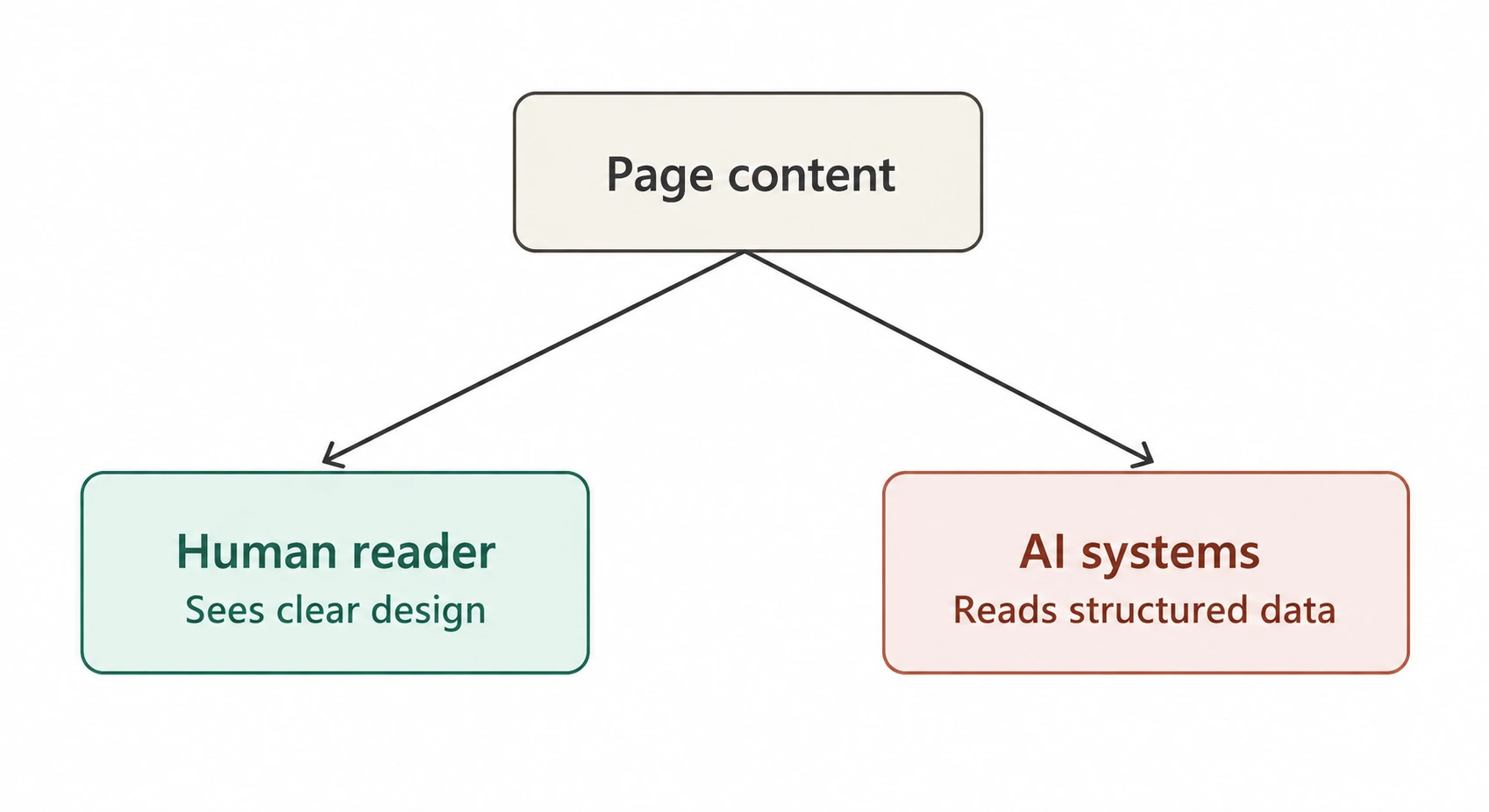
Why is website design becoming continuous instead of project-based?
Because customer expectations and competitor experiences now change faster than a multi-year redesign cycle can keep pace, businesses are shifting to ongoing, AI-informed iteration rather than periodic relaunches.
The Future of Search Is Changing Website Design
More people are getting answers from AI assistants and conversational search instead of clicking through search results – which means content has to be structured for direct extraction, not just ranked.
That’s changing what “good content” looks like:
- Clear headings and concise explanations
- FAQ sections that answer specific questions directly
- Structured data/schema markup
- Logical information architecture
Businesses that optimize solely for rankings risk missing this shift. The content that AI systems can confidently cite is content that’s unambiguous, well-sourced, and easy to lift a clean answer from – which increasingly matters as much as keyword targeting.
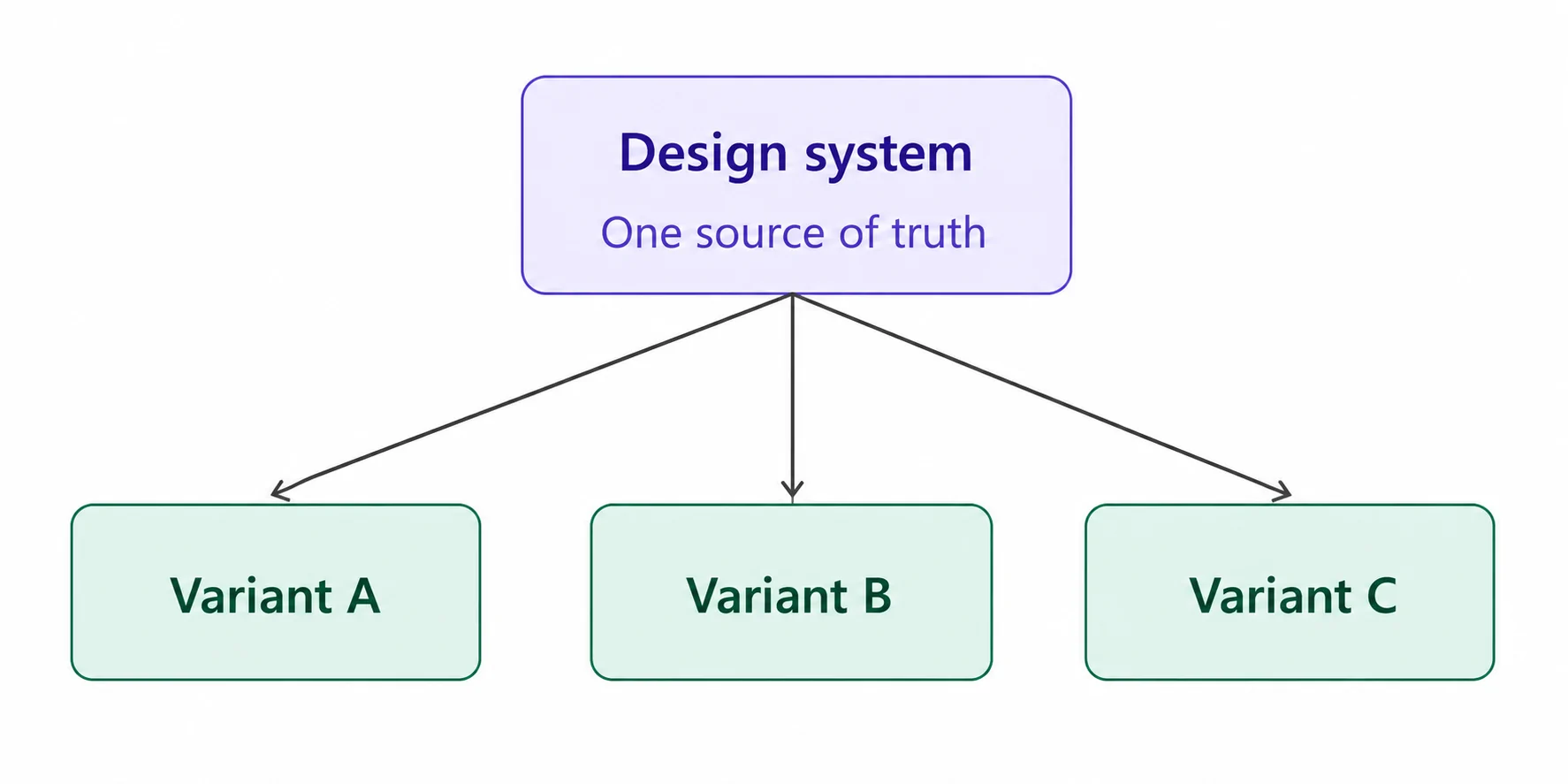
How is AI search changing website structure?
As more people get answers directly from AI assistants instead of clicking through search results, websites need clear headings, FAQs, and structured data so AI systems can accurately extract and cite their content.
Human-Centered Design Matters More Than Ever
AI can generate layouts, recommend content, and automate testing – but it can’t originate an understanding of why customers hesitate, what builds trust, or what a brand should stand for. That’s still a human call.
The most effective digital experiences pair AI’s speed with a human UX strategy: AI surfaces the pattern, a person decides what it means and what to do about it. Organizations that treat AI as a tool for better decisions – not just faster production – end up with sites people actually want to use.
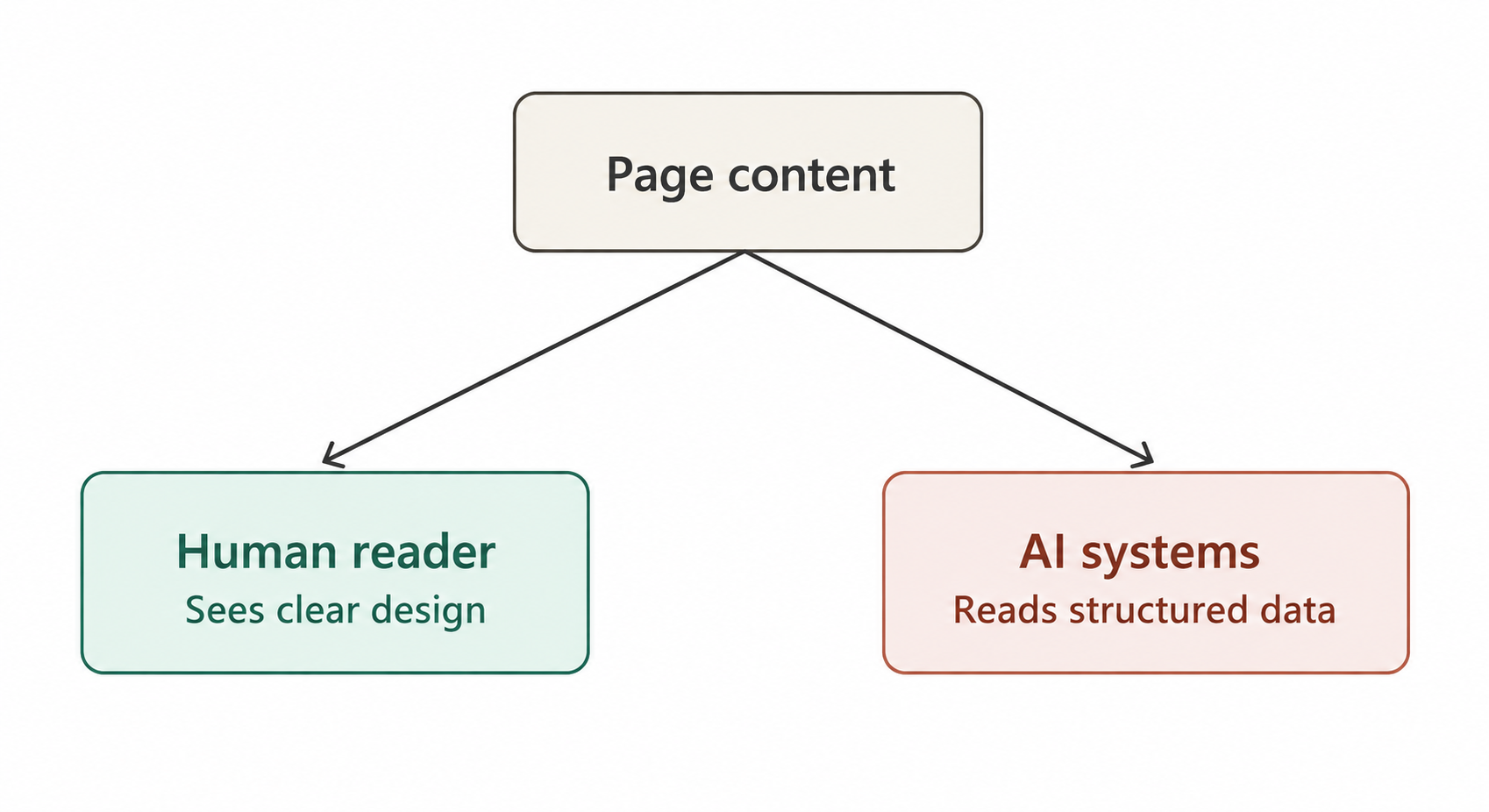
Why does human judgment matter more, not less, as AI takes on more design work?
Because AI can automate layout and content decisions, but it can’t replace a human understanding of customer motivation, trust, and brand, which determine whether those AI-driven decisions are actually the right ones.
Conclusion
Artificial intelligence isn’t redefining web design simply by generating layouts faster or automating repetitive tasks. It’s redefining web design by changing what people expect from every digital interaction.
Customers no longer compare your website only with your competitors. They compare it with every intuitive, personalized experience they encounter online, from AI assistants that answer questions instantly to platforms that anticipate what they need before they ask.
Those experiences are quietly raising the standard for every business website.
The shifts we’ve discussed all point to the same reality: websites are becoming more adaptive, more responsive, and better at learning from the people who use them.
Success won’t come from adding AI features for the sake of innovation.
It will come from building digital experiences that reduce friction, understand user intent, and evolve as customer expectations continue to change.
The businesses that succeed over the next few years won’t necessarily be the ones using the most advanced AI. They’ll be the ones combining thoughtful design, meaningful customer insights, and intelligent technology to create websites that feel genuinely helpful every time someone visits.
At Beanstalk Web Solutions, a web design company based in St. Louis, this is the kind of website we build for our clients – combining thoughtful design, real customer insight, and the right AI-driven tools. Hence, a site stays genuinely helpful as expectations keep shifting, not just at launch. If your website hasn’t been rethought with that lens yet, let’s talk about what that could look like.